How Much Does Website Design Cost in Dubai?
Website design cost in Dubai is shaped by bilingual content, RTL layout needs, and local payment integration more than by generic pricing tables.
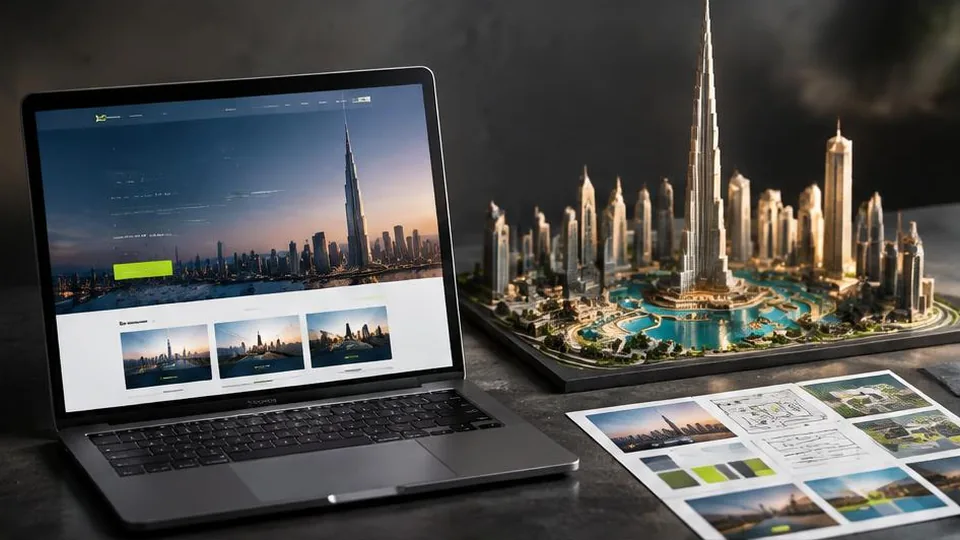
Website design cost in Dubai is shaped less by where the provider is based and more by UAE-specific requirements: bilingual Arabic/English content, right-to-left (RTL) layout support, local payment gateway integration, and domain registration rules tied to trade licences. These factors add real scope to a project beyond a standard English-only brochure site.
If you are budgeting for a website in Dubai or elsewhere in the UAE, it helps to understand these specific cost drivers rather than comparing against generic global pricing.
How This Differs From a Single-Market Website
A business targeting only English-speaking customers in a single country can often launch with a simpler structure. A UAE-based business serving a bilingual, often international audience needs to plan navigation, forms, and even date and currency formatting with both languages and local conventions in mind from the outset, rather than treating Arabic as a secondary afterthought.
Bilingual Arabic/English Content
Many UAE businesses serve both Arabic-speaking and English-speaking customers, so a bilingual website is common. This involves:
- Translating all page content accurately, not just machine-translating
- Structuring the site so visitors can switch languages easily
- Ensuring Arabic typography displays correctly across devices
This is meaningfully more work than a single-language site, since every page effectively needs to be designed and tested twice.
RTL Layout Considerations
Arabic is read right to left, which means navigation menus, icons, forms, and even image placement often need to mirror the English layout rather than simply reusing the same design. A site built only with LTR (left-to-right) assumptions in mind can look broken or confusing when switched to Arabic. Planning for RTL from the start, rather than retrofitting it, keeps the project cleaner and avoids rework.
UAE Payment Gateways
If your site needs to accept online payments, integrating with payment providers that operate smoothly in the UAE market is an important consideration. Local payment preferences, currency display (AED), and compliance with regional banking requirements can all affect how an online store or booking system is built. This is especially relevant for businesses setting up an online store in Dubai.
Domain Registration and Trade Licence Requirements
Registering a .ae domain generally requires proof of a valid UAE trade licence or other recognised documentation, unlike many global domain extensions. This is worth factoring into your project timeline, since gathering the right documentation can take time if it is not already on hand. Our domain and digital setup service can guide you through this process.
Common Mistakes to Avoid
- Launching an Arabic version as a direct machine translation of the English site, without reviewing tone and accuracy
- Designing only for left-to-right layouts and treating RTL as an afterthought, which often means redesigning navigation later
- Starting payment gateway integration late in the project, when it should be scoped from the beginning if the site will sell online
- Assuming a .ae domain can be registered the same way as a .com, then being delayed by missing trade licence documentation
Questions to Ask a Provider Before Starting
- Have they built bilingual Arabic/English sites with proper RTL support before?
- Can they show live examples, not just design mockups, of RTL layouts they have delivered?
- Do they understand UAE payment gateway options relevant to your business type?
- Can they guide you through .ae domain registration requirements if you do not already have a trade licence ready?
Example Scenario
A real estate business targeting both Arabic and English-speaking buyers needs more than a translated homepage. Property listings, contact forms, and navigation all need to work cleanly in both directions, and enquiries need to route correctly regardless of which language a visitor used. This is a meaningfully larger project than a single-language brochure site, and it is worth scoping accordingly from day one.
Design Expectations in the UAE Market
Businesses in Dubai often compete in a visually competitive market, particularly in sectors like real estate, hospitality, and retail. This can mean higher expectations around photography, custom design, and polish compared to a purely functional site. Our website design and website style direction services are built to support that level of presentation.
Industry-Specific Notes for the UAE Market
Real estate businesses often need strong visual presentation and listing-heavy pages, while clinics and salons frequently need booking systems that respect both Arabic and English scheduling conventions. Retail and hospitality businesses competing for tourist and resident attention tend to invest more heavily in photography and visual polish. Matching your site to these expectations, rather than using a generic template, tends to produce better results in a competitive market like Dubai.
A Short Planning Checklist
- Decide whether you need English only, Arabic only, or a bilingual site
- Identify which payment methods your customers actually expect to use
- Confirm your trade licence and domain documentation are in order before development begins
- Set expectations for photography and visual quality relative to your competitors
Planning Ahead for Growth
Many UAE businesses expand their online presence over time, adding an online store, a loyalty programme, or additional language support as they grow. Discussing these future plans during your initial consultation, even if you are not building them immediately, helps ensure your site's foundation can support them later without a costly rebuild.
No Office, Fully Remote Delivery
A website design project in Dubai does not require the provider to have a physical office in the city. Remote collaboration — video calls, shared documents, staged previews — works well for web design projects, as long as the team understands the local requirements outlined above.
Getting an Accurate Quote
Because bilingual content, RTL design, and payment integration all vary in complexity depending on your specific business, the only reliable way to know your cost is a consultation. Every project is unique, and a personalised quote reflects your actual scope rather than a generic estimate.
Get in touch to discuss your project, or see our work for examples of multilingual and regionally tailored websites.
Frequently asked questions
Do I need an Arabic version of my website in the UAE?
It depends on your audience. Many businesses in the UAE serve a bilingual customer base, so an Arabic version alongside English can widen your reach, though it is not legally mandatory for most private business sites.
What is RTL layout and why does it matter?
RTL (right-to-left) layout mirrors the site structure for Arabic content, since Arabic reads right to left. It affects navigation, icons, and text alignment, and needs to be planned rather than bolted on afterward.
Do I need a trade licence to register a .ae domain?
Yes, registering a .ae domain typically requires a valid UAE trade licence or relevant documentation, which is different from generic domain extensions like .com.
Can a remote team build a website for a UAE-based business?
Yes. Website design and development work can be done remotely without needing a local office, as long as the team understands UAE-specific requirements like bilingual content and local payment gateways.
Related articles
How Much Does a Website Cost in 2026?
Website cost depends on scope, design, and functionality rather than a fixed number. Here is how to think about the real cost drivers in 2026.
October 10, 2026
How Much Does Website Design Cost in the USA?
Website design cost in the USA is influenced heavily by accessibility compliance and whether you hire a freelancer or an agency.
October 10, 2026
How to Create an Online Store in Dubai
Launching an online store in Dubai involves more than picking a platform — licensing, local payment options, and delivery logistics all need planning.
October 10, 2026