Landing Page vs. Website: What's the Difference?
A landing page and a full website serve different purposes. Here's how to tell them apart and which one fits your current goal.
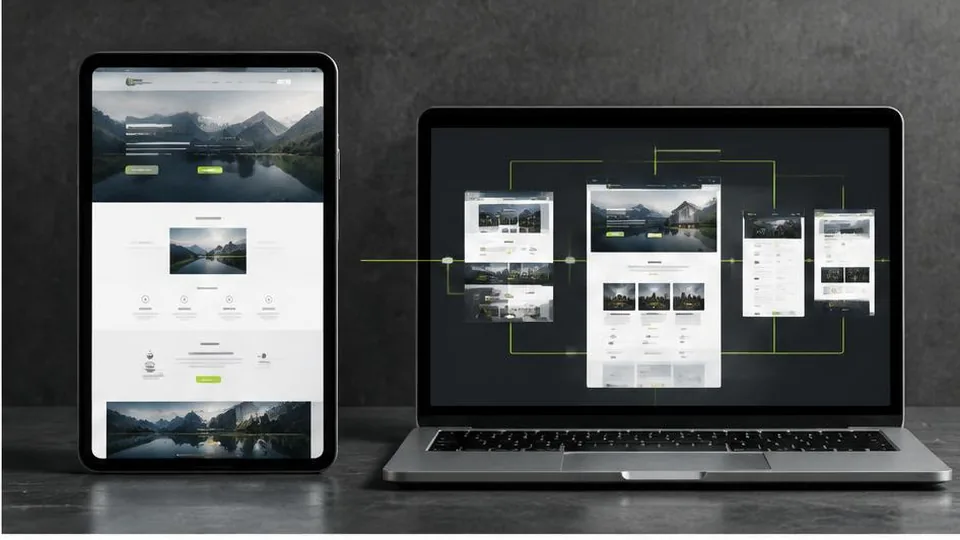
A landing page and a website are often confused because both live online and both can represent a business, but they're built for different purposes. Understanding the difference helps you decide which one — or both — fits what you're actually trying to achieve.
The core difference
A landing page is a single, focused page designed around one specific goal: getting a visitor to take one action, like booking a call, signing up, or buying one product. It usually has minimal navigation and is built to funnel attention toward that single action.
A website is a broader collection of pages that together represent your whole business: who you are, what you offer, how to contact you, and often a blog or portfolio. It serves many different visitor intents, not just one.
When a landing page makes sense
Landing pages work best for narrow, specific goals, such as:
- A paid advertising campaign promoting one offer
- A product launch or limited-time promotion
- Collecting signups for an event or newsletter
- A specific service you want to highlight separately from your main site
Because landing pages strip away distractions like full navigation menus, they tend to have higher conversion rates for that one specific goal, which connects directly to the principles covered in how to improve your website's conversion rate.
When a full website makes sense
A full website makes more sense when:
- You offer multiple services or products that each deserve their own explanation
- You want to build long-term trust and credibility with visitors who are researching, not just ready to buy immediately
- You need to rank in search engines for a range of different terms, which requires more than a single page can reasonably cover, as discussed in business website pages
- You want a central place to link to from all your other marketing, including social media and local listings
For most established small businesses — clinics, restaurants, salons, local services — a full website remains the better long-term investment because it supports ongoing discovery, not just one campaign.
Can you have both?
Yes, and it's a common, effective setup. A business might maintain a full website as its main hub, while also creating dedicated landing pages for specific ad campaigns or seasonal promotions. The landing page can exist as a page within the website's structure, or on a separate address entirely, depending on tracking and campaign needs.
This is similar to the decision covered in one-page vs. multi-page website — it's not that one format is universally better, but that each serves a different stage of a visitor's journey.
Choosing based on your current goal
Ask yourself what you're actually trying to achieve right now. If you're running a specific promotion or launching a new offer and want a visitor's full attention on one action, a landing page is the more effective tool. If you're trying to establish your business's overall online presence, answer a wide range of customer questions, and build long-term search visibility, a full website is the better foundation.
Many businesses start with a simple small business website and later add targeted landing pages as specific marketing needs arise, rather than trying to force one page to do both jobs at once.
If you're unsure which approach fits your current stage, a conversation through ForYourWeb's web design service can help map out whether a focused landing page, a full site, or a combination of both will serve your actual goals best.
A quick decision checklist
Ask yourself these questions to decide which fits your current need:
- Am I promoting one specific offer, or representing my whole business
- Do I want visitors to see multiple pages and explore, or take one immediate action
- Will I be driving paid traffic to this page from a specific ad or campaign
- Do I need this to rank in search engines for a variety of different terms over time
- Will this need to be updated regularly with new content, services, or blog posts
If most answers point to one specific offer and one action, a landing page fits. If they point to variety and long-term discovery, a full website fits better.
Example: a seasonal promotion
A flower shop running a one-week Mother's Day promotion might build a dedicated landing page just for that offer, with a single large call-to-action button to order, no distracting navigation, and messaging entirely focused on the occasion. Meanwhile, their main website continues to serve everyday visitors looking for regular arrangements, delivery information, and shop hours. Mixing the two — cramming a seasonal campaign onto the homepage, or trying to make a landing page cover the whole business — usually serves both goals worse than treating them separately.
Common mistakes to avoid
- Sending paid advertising traffic to a general homepage instead of a focused landing page matching the ad's exact offer
- Building a landing page with a full navigation menu, which gives visitors an easy way to wander off before converting
- Assuming a landing page can replace an entire website's SEO value, when it typically targets only one goal or keyword
- Letting an old campaign landing page stay live and discoverable long after the offer has ended, confusing visitors who find it through search
Questions to ask a developer
- Will this landing page share the same hosting and domain as my main website, or operate separately
- How will we track whether the landing page is actually converting visitors
- Can the landing page's design stay consistent with our overall branding even though it has different navigation
- What happens to this page once the campaign ends
Keeping branding consistent across both
Whichever option you choose, keeping fonts, colors, and tone consistent between a landing page and your main website matters. A visitor who clicks from a campaign landing page through to your full site should feel like they're still in the same place, not switching to an entirely different brand. This consistency is part of why planning a logo and overall visual identity early pays off across every page you eventually build, not just the first one.
Frequently asked questions
Can a landing page replace a full business website?
For a single campaign or offer, yes. But for an established business that needs to build trust, show multiple services, and rank for different searches, a full website usually serves you better long-term.
Do I need a separate domain for a landing page?
Not necessarily. A landing page can live on its own domain for a specific campaign, or as a page within your existing website, depending on your goal.
Which converts better, a landing page or a homepage?
For a specific offer or ad campaign, a focused landing page usually converts better because it removes distractions. A homepage serves a broader purpose and isn't designed around a single action.
Can I have both a website and landing pages?
Yes, and many businesses do. The website serves as the main hub, while individual landing pages are created for specific campaigns, promotions, or ads.
Related articles
One-Page vs. Multi-Page Websites: Which Is Better?
Neither structure is better in general — the right choice depends on what your business sells, how customers search, and how much content you need.
October 10, 2026
What Pages Should Every Business Website Have?
Every business website needs a core set of pages to build trust and guide visitors to act. Here's the checklist and why each page earns its place.
October 10, 2026
How to Improve Your Website's Conversion Rate
Traffic alone doesn't grow a business — conversions do. Here's a practical breakdown of how to improve your website's conversion rate.
October 10, 2026