One-Page vs. Multi-Page Websites: Which Is Better?
Neither structure is better in general — the right choice depends on what your business sells, how customers search, and how much content you need.
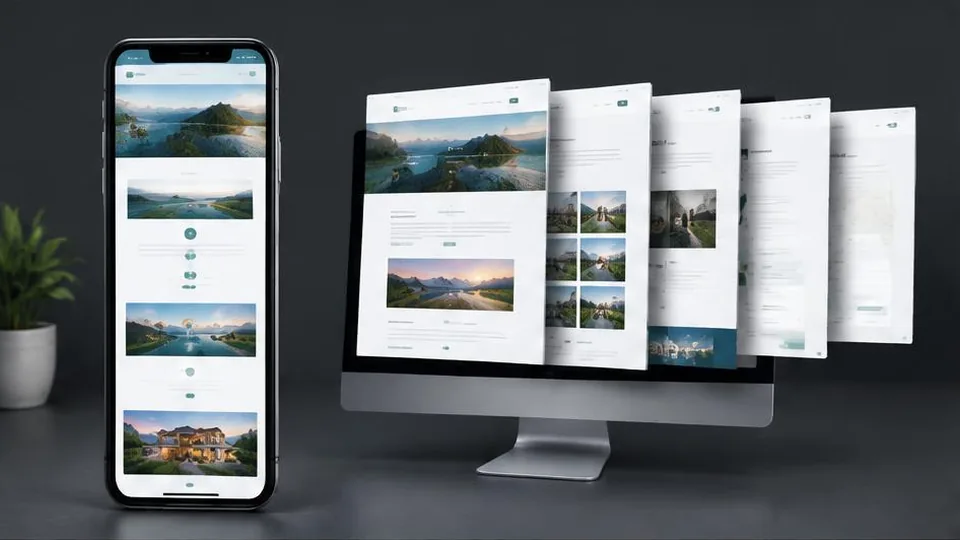
A one-page website works best for simple businesses with a single offer and a short decision path, while a multi-page website suits businesses with multiple services, products, or the need to rank for several search terms. Neither is universally better — the right choice depends on what you sell and how customers find you.
What a one-page website is
A one-page site puts everything — your introduction, services, testimonials, and contact details — on a single scrolling page, usually navigated with anchor links that jump to different sections. It's common for personal brands, single-service businesses, event pages, and simple portfolios.
Advantages:
- Simple, fast to build, and often more affordable
- Easy for visitors to scroll through the whole story without clicking around
- Works well on mobile, where scrolling feels natural
- Keeps the message focused on one clear call to action
Limitations:
- Hard to rank for more than one or two search terms, since there's only one URL
- Can feel cramped if you have more than a handful of services or a lot of content to share
- Difficult to track which section visitors are most interested in
- Not ideal for e-commerce or businesses needing detailed individual service pages
What a multi-page website is
A multi-page site splits content across separate pages — home, about, services, individual service or product pages, blog, contact — each with its own URL. Most established businesses, especially those with multiple offerings, benefit from this structure. See our guide on business website pages for what pages are generally worth including.
Advantages:
- Each page can target different search terms, improving overall SEO reach
- Easier to organize detailed information without overwhelming visitors
- Scales naturally as your business adds services or locations
- Better suited for analytics, since you can see which pages perform best
Limitations:
- Takes more time and content to build properly
- Requires thoughtful navigation so visitors don't get lost
- Generally costs more than a one-page site, simply because there's more to design and write
How to decide
Ask yourself these questions:
- How many distinct services or products do I offer? One or two favors a one-page site; several favors multi-page.
- Do I need to rank on Google for multiple search terms? If yes, dedicated pages per topic perform better in search.
- How much content do I realistically have? A one-page site with too little content looks thin; a multi-page site with too little content looks empty.
- Will my business grow in the next year or two? If you expect to add services, locations, or products, a multi-page structure avoids a rebuild later.
- What's my budget right now? A one-page site can be a smart, affordable starting point — see our guide on affordable website design for how to prioritize spending.
A hybrid approach
Many businesses start with a lean multi-page site — home, about, services, contact — rather than committing fully to either extreme. This gives room to rank for a few key terms while keeping the site manageable to build and maintain. As the business grows, more pages can be added without restructuring everything, which is far easier than converting a one-page site into a multi-page one later.
If you already have a one-page site and are starting to feel its limits, a website redesign that restructures your content into a proper multi-page format can solve this without losing the content you've already built up.
A simple decision checklist
Answer these quickly to get a sense of which structure fits better:
- Do you offer one core service, or several distinct ones? (One service leans one-page; several lean multi-page.)
- Do you need to rank on Google for more than one or two search terms?
- Will you be adding content, services, or products within the next year?
- Is most of your traffic likely to come from a single campaign or source, like social media or an ad?
- Do you have enough real content to fill multiple pages without padding them with filler?
Common mistakes when choosing a structure
- Choosing one-page purely to save money, without considering whether the business will outgrow it within months.
- Building a multi-page site with too little content, leaving several pages feeling empty and incomplete.
- Forcing unrelated services onto one page just to avoid building a multi-page site, which confuses visitors trying to understand what's actually offered.
- Not planning for growth, leading to a messy restructuring later instead of an easy page addition.
- Assuming one structure is inherently more professional than the other — the right structure depends entirely on content and goals, not on which looks more sophisticated.
A short example: two small businesses, two right answers
A personal trainer offering one core coaching package with a single pricing tier and a short list of testimonials may do perfectly well with a clean one-page site that guides visitors straight to a booking link. A local accounting firm offering tax preparation, bookkeeping, and business consulting services, each with different clients and search intent, needs separate pages so each service can be found and understood on its own. Neither business is wrong to choose differently — the structure simply needs to match what's actually being offered.
Questions worth discussing with your designer
- Based on what we offer, which structure would you recommend and why?
- If we start with one page, how easily can it expand into a multi-page site later?
- Which of our services or offerings are worth their own dedicated page for search visibility?
- How much content do we realistically have ready, and how much will need to be written?
Making the right call for your business
There's no universally correct answer here — a restaurant with one location and one menu might do perfectly well with a tight one-page site, while a real estate agent listing multiple properties and services clearly needs a multi-page structure. The best approach is to map out what your customers need to know before deciding how to present it, and to work with a web design partner who will recommend the structure that fits your actual goals rather than defaulting to whichever is easier to sell.
If you're unsure which direction makes sense for your business, a short consultation can clarify this quickly — contact us to talk through your specific situation, or browse our work to see both formats in practice.
Frequently asked questions
Is a one-page website good for SEO?
One-page sites can rank for a narrow set of terms but generally struggle to compete for multiple keywords compared to a multi-page site with dedicated, in-depth pages.
Can I start with one page and expand later?
Yes, this is a common and sensible approach if your structure is planned properly from the start, so added pages fit naturally instead of requiring a rebuild.
Which is cheaper, one-page or multi-page?
One-page sites are often less expensive to build initially since there is less content and fewer pages to design, but costs depend on your exact needs.
What type of business should avoid a one-page website?
Businesses with multiple distinct services, product catalogs, or a need to rank for many different search terms usually outgrow a one-page format quickly.
Related articles

What Pages Should Every Business Website Have?
Every business website needs a core set of pages to build trust and guide visitors to act. Here's the checklist and why each page earns its place.
October 10, 2026
Affordable Website Design: What Small Businesses Should Know
Affordable doesn't have to mean cheap or risky. Here's how small businesses can get real value from a website without overspending or underbuilding.
October 10, 2026
Website Redesign: When and Why Your Business Needs It
A website redesign is more than a new look — it's a chance to fix what's quietly costing you customers. Here's how to know it's time.
October 10, 2026