How Much Does a Restaurant Website Cost?
Restaurant website cost depends on far more than page count — menu complexity, photography, and ordering features all shape the final price.
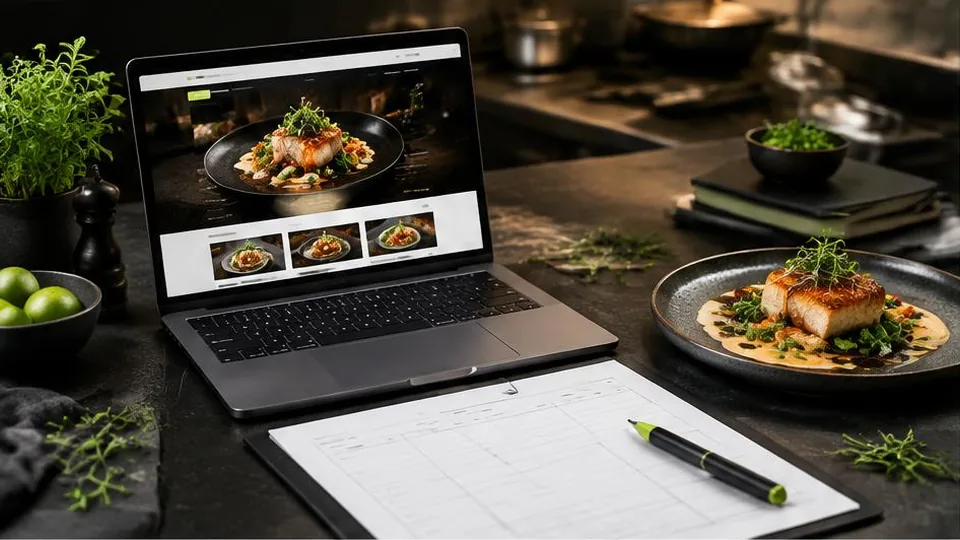
The cost of a restaurant website depends on how many pages it needs, whether it includes online ordering or reservations, how much custom photography is required, and how much content needs to be written from scratch. There's no fixed number that applies to every restaurant, because these factors vary so much from one business to another.
Rather than searching for a flat price, it helps to understand what actually drives the cost up or down, so you can plan a realistic budget and know what you're paying for.
Factors that influence the price
Number and complexity of pages
A simple restaurant site with a homepage, menu, about, and contact page costs less than one with multiple pages for different locations, event spaces, private dining, or catering services. If you're unsure how many pages you actually need, our guide on business website pages explains the essentials.
Menu structure
A straightforward menu with a handful of categories is simpler to build than one with seasonal items, multiple menus (lunch, dinner, brunch, drinks), dietary filtering, or frequent price changes that require an easy content-management setup.
Online ordering and reservations
Adding a reservation booking tool or a full online ordering system with payment processing significantly increases the scope of the project compared to a site that simply displays information and relies on phone calls. These features involve integrations, testing, and often ongoing maintenance.
Photography and content
If you already have professional photos and well-written descriptions, the project moves faster and costs less. If photography needs to be arranged and menu copy written from scratch, that adds time and often a separate cost for photography services.
Branding and design customization
A fully custom design tailored to your restaurant's atmosphere and branding costs more than a simpler, template-based approach. If your branding — logo, colors, fonts — isn't established yet, you may also want to budget for logo design or a brand book alongside the website.
Ongoing support
Some restaurants need frequent menu and price updates; others rarely change their offerings. If you'll need regular updates, factor in either training to do it yourself or an ongoing support arrangement with your developer.
A simple way to think about your budget
| Factor | Lower cost | Higher cost |
|---|---|---|
| Pages | 3–5 core pages | 8+ pages with multiple sections |
| Menu | Single static menu | Multiple menus with frequent changes |
| Ordering | Phone/third-party apps only | Built-in online ordering with payments |
| Photography | Existing photos provided | New professional photography needed |
| Design | Template-based | Fully custom design |
Why generic price lists don't help
Many restaurant owners search for a specific dollar figure, but quotes that promise a fixed price without understanding your specific menu, features, and goals are often misleading — either underselling what you actually need or overcharging for features you won't use. A restaurant with a simple menu and no online ordering has very different needs from one running a full delivery operation, and the price should reflect that difference.
Common budgeting mistakes restaurant owners make
- Comparing quotes without comparing scope. A lower quote may exclude photography, content writing, or online ordering that a higher quote includes.
- Underestimating ongoing costs. Hosting, domain renewal, and occasional content updates continue after launch and should be planned for.
- Delaying photography decisions. Waiting until the site is almost finished to think about photos often causes delays and rushed, lower-quality images.
- Adding online ordering as an afterthought. This feature is far easier and cheaper to plan for from the start than to add after launch.
- Skipping a clear menu structure upfront. Reorganizing menu categories midway through a project adds time and cost that could have been avoided with early planning.
A short example: two restaurants with different needs
A small neighborhood café with a short, rarely changing menu and no delivery plans has very different needs from a multi-location restaurant group offering reservations, a seasonal menu, and full online ordering. Both are "restaurant websites," but the features, content volume, and ongoing support each one needs are completely different — which is exactly why cost estimates that ignore these differences aren't useful.
Questions to ask yourself before requesting a quote
- Will customers primarily browse the menu, make reservations, order online, or some combination of all three?
- How often does our menu or pricing change, and who will make those updates?
- Do we have professional photos already, or does that need to be arranged?
- Do we need the site to support multiple locations?
- What level of ongoing support do we expect to need after launch?
Having clear answers to these questions before a conversation with a developer leads to a far more accurate and useful quote than asking for a generic number upfront.
Where platform choice fits into the cost picture
The platform behind your restaurant website also affects both upfront and ongoing cost. A custom-built site can be tailored exactly to your menu and ordering needs but may take longer to launch. A platform like WordPress offers flexibility and a large ecosystem of tools, while dedicated e-commerce platforms can simplify online ordering but may come with transaction fees. Discussing these trade-offs early, rather than after a platform has already been chosen, helps avoid paying to switch systems later.
Getting an accurate number
The only reliable way to know what your restaurant website will cost is through a conversation about your specific menu, features, photography needs, and growth plans. Every project is unique, and a personalised quote following a short consultation will give you a far more useful number than any generic estimate. If you'd like to explore what your restaurant's website could look like and what it would cost, see our restaurant website design guide for feature ideas, then contact us to discuss your specific project, or view our work for examples of completed restaurant websites.
Frequently asked questions
Does online ordering increase the cost of a restaurant website?
Yes, online ordering adds complexity through menu management, payment processing, and order notifications, so it typically increases cost compared to a site that only displays information.
Is it cheaper to use a template for a restaurant website?
Templates can lower upfront cost, but they often limit customization and may not handle menu updates or photography as well as a tailored design, which can cost more to fix later.
Do I need to pay for photography separately?
Often yes. Professional food photography is usually priced separately from website design, though some providers can help coordinate or recommend photographers as part of the project.
Will I need to pay ongoing costs after the website is built?
Most restaurant websites have some ongoing costs for hosting, domain renewal, and occasional content updates, separate from the initial design and build cost.
Related articles
Restaurant Website Design: Essential Features and Benefits
A restaurant's website is often the deciding factor between a diner choosing you or a competitor. Here's what it needs to get right.
October 10, 2026
Affordable Website Design: What Small Businesses Should Know
Affordable doesn't have to mean cheap or risky. Here's how small businesses can get real value from a website without overspending or underbuilding.
October 10, 2026
What Pages Should Every Business Website Have?
Every business website needs a core set of pages to build trust and guide visitors to act. Here's the checklist and why each page earns its place.
October 10, 2026