Custom Website vs. Website Builder: Which Is Better?
Choosing between a custom website vs a website builder depends on how much flexibility, speed, and long-term growth your business needs.
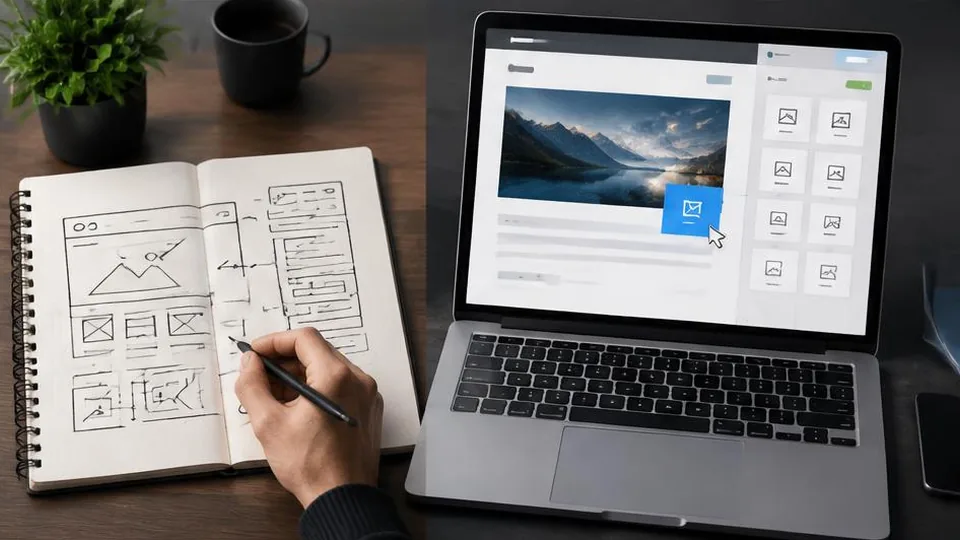
A custom website is built from the ground up around your specific business needs, while a website builder uses pre-made templates and drag-and-drop tools to get a site live quickly. Neither is universally better — the right choice depends on how much flexibility, control, and growth capacity your business actually needs.
Here is a direct comparison to help you decide.
How They Differ
Website builders
Platforms like Wix, Squarespace, or Shopify's built-in editor let you choose a template and customise it within the platform's limits. They typically include hosting, basic security, and support as part of a subscription.
Custom websites
A custom website is designed and coded specifically for your business, without being locked into a particular platform's template structure. This generally means more design freedom and more control over functionality, but it also involves more upfront planning and development work through a process like our web design service.
Comparing the Two Directly
| Factor | Website Builder | Custom Website |
|---|---|---|
| Speed to launch | Generally faster | Takes longer due to custom design and build |
| Design flexibility | Limited to template options | Unlimited within technical feasibility |
| Ongoing cost structure | Monthly subscription | Hosting and maintenance, often separate from design |
| Scalability | Can hit platform limits as needs grow | Built to scale with your business |
| Technical control | Limited to platform features | Full control over code and integrations |
| Ownership | Often tied to the platform | You generally own the full codebase |
When a Website Builder Makes Sense
- You need a simple site live quickly
- Your budget is limited and your needs are straightforward
- You are testing a business idea before committing further
- You do not need advanced custom functionality
When a Custom Website Makes Sense
Think of this as a decision point revisited periodically, rather than a one-time choice made forever.
Many growing businesses find that a custom approach pays off once they outgrow a template's constraints, even if a builder served them well in the early stages.
- Your brand and design need to stand out from template-based competitors
- You need specific functionality — booking systems, custom integrations, unique layouts
- You expect to scale significantly and do not want to hit platform limits
- You want full ownership and control over your site's code and data
Common Mistakes When Choosing Between the Two
- Choosing a builder purely for low upfront cost without considering how it will handle growth
- Assuming a custom website is always slower, when a well-scoped custom build can move efficiently with clear content readiness
- Overlooking data portability — not checking how easily content can be exported if you later want to switch platforms
- Picking a builder for a business that genuinely needs custom booking or inventory logic it cannot support
A Practical Example
A new café testing its concept before committing to a permanent location might reasonably start with a website builder to get a simple menu and contact page online quickly. A growing multi-location clinic with booking, staff profiles, and insurance information, on the other hand, is more likely to outgrow a builder's template constraints and benefit from a custom build from the start.
Questions to Ask Before Choosing
- How much do I expect this site to change or grow over the next two to three years?
- Do I need functionality that goes beyond what a builder template supports?
- How important is it that my site looks distinct from competitors using the same platform?
- Am I comfortable with a monthly subscription cost indefinitely, or do I prefer owning the build outright?
The Branding Factor
Website builders often make it harder to achieve a fully distinct visual identity, since many sites on the same platform use similar layout patterns. If differentiation matters to your business, pairing a custom website with logo design and a defined website style direction tends to produce a more memorable result.
A Middle Ground: WordPress
WordPress sits between the two extremes — more flexible than most pure builders, but not as fully custom as a hand-coded site. If you are weighing all three paths, our comparison of Wix vs. WordPress vs. custom website breaks this down further.
Signs You Are Outgrowing a Website Builder
- You are frequently fighting the template to achieve a layout it was not designed for
- Your monthly subscription costs are climbing as you add paid add-ons and apps
- You need integrations the builder does not natively support
- Your competitors' custom sites look noticeably more distinct than yours
If several of these sound familiar, it may be time to look at a website redesign built around your specific needs rather than a platform's constraints.
Making the Decision
Ask yourself:
- How important is a unique visual identity to my business?
- Do I need functionality beyond what a builder template offers?
- How much do I expect this website to grow or change in the next few years?
- Do I want full ownership of the underlying code?
If most answers point toward flexibility and growth, a custom build is likely the better long-term investment. If speed and simplicity matter most right now, a builder can be a reasonable starting point — and you can always consider a website redesign later as your needs evolve.
A Final Gut Check
If you are still unsure, picture your website in two years. If you imagine mostly the same pages with small content updates, a builder may serve you well. If you imagine new features, more pages, and a business that has outgrown its original scope, a custom build is likely the better long-term fit.
Next Steps
Every business situation is different, and the right choice depends on your specific goals and timeline. Get in touch to discuss which approach fits your business, or see our work for examples of custom-built sites.
Frequently asked questions
Is a website builder good enough for a small business?
For many simple needs, yes. Website builders work well for straightforward brochure sites with modest growth plans.
Can I switch from a website builder to a custom site later?
Yes, though content and design typically need to be recreated rather than directly transferred, since builders often use proprietary formats.
Is a custom website always more expensive?
Not necessarily at every scale, but custom builds generally involve more design and development time upfront, which affects cost. See our guide on website cost for the full picture.
Do custom websites rank better in search engines?
Ranking depends more on content quality, technical performance, and relevance than on whether a site is custom-built, though custom builds offer more control over technical SEO details.
Related articles
How Much Does a Website Cost in 2026?
Website cost depends on scope, design, and functionality rather than a fixed number. Here is how to think about the real cost drivers in 2026.
October 10, 2026
Wix vs. WordPress vs. Custom Website: Complete Comparison
Wix, WordPress, and custom websites each suit different business needs, from quick simple sites to fully tailored, scalable platforms.
October 10, 2026
How to Create a Professional Website for Your Small Business
A professional small business website is built around clear goals, the right pages, and content that builds trust, not just good looks.
October 10, 2026